TELEPHONES ANSWERED 24 HOURS A DAY

FREE CONSULTATION
312-629-0669


What to Know About Perjury and Lying Under Oath
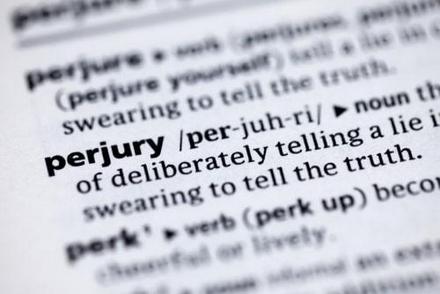 Many of us may have heard of the terms "lying under oath" and "perjury" on TV or in movies. However, not everyone understands what these terms mean in real life. Perjury is not only against the law. It can also be considered a federal crime. Lying under oath is strictly prohibited by federal statutes. If someone is accused of lying under oath or another federal offense, a strong legal defense may be important to protect their rights and work toward a fair outcome. Speaking with an experienced Chicago, IL criminal defense lawyer is the first step to understanding how to navigate this kind of case.
How Does Federal Law Define Lying Under Oath?
An oath is a formal promise to tell the truth. A person may be placed under oath in a courtroom, during a deposition, or when signing a document that requires truthful information. Once they are under oath, the law requires the statements they make to be truthful. If false information is given on purpose, the situation may be considered perjury.
Perjury is defined under 18 U.S.C. § 1621, which makes it a crime to knowingly provide false information while under oath during a federal proceeding. This may include testimony in court or statements made during a sworn interview. Statute § 1623 further addresses situations where false statements are made in federal court or before a federal grand jury. These statements often play a direct role in legal decisions, so accuracy is required.
Distinguishing Incorrect Statements from Perjury
The law emphasizes that accuracy and honesty are important in legal proceedings. However, it also clarifies that a false statement must be intentional to be considered perjury. A mistake, misunderstanding, or memory error does not automatically mean a crime occurred. The person must have known the information was false at the time to be convicted of perjury.
Human memory is not perfect. People may forget certain details or recall events differently from how others do. This is even more likely to happen during stressful or emotional situations. A statement that turns out to be wrong is not automatically considered perjury.
For a statement to be considered perjury, certain conditions must be met. The statement must have been made under a legal oath, and it must have been false. The person must have known the information was false at the time. The statement also needs to have significant relevance to the legal issue being addressed, meaning it has the potential to affect the outcome of the case. Without all of these elements, the statement does not rise to the level of perjury under federal law.
If a statement was based on a misunderstanding, confusion, or incomplete recollection, then it may not be considered perjury. Courts often review the context of the statement to determine whether it involved deliberate dishonesty. An attorney can help explain how these factors apply in a specific case and present the circumstances clearly to the court.
Is Remaining Silent the Same as Making a False Statement Under Oath?
Perjury involves making false statements. Choosing not to answer a question is not considered lying. However, refusing to answer a lawful question can result in separate consequences. The court may treat this as contempt of court, which can lead to fines or other penalties.
There are also situations where a person is allowed to remain silent. The Fifth Amendment protects you from providing information that could be used to bring charges against you. Whether this right applies depends on the situation. Legal guidance can be helpful in deciding when silence is legally allowed.
Common Situations Where Perjury May Occur
Perjury does not only happen on the witness stand. It can arise in many legal and government settings. Common examples include:
-
Testimony in civil or criminal trials
-
Statements made during a grand jury hearing
-
Depositions during pre-trial investigation
-
Affidavits submitted to a court
-
Bankruptcy filings that require complete financial disclosure
-
Immigration forms signed under penalty of perjury
-
Federal or state benefit applications that require truthful information
Potential Penalties for a Federal Perjury Conviction
Perjury is classified as a felony under federal law. A conviction may result in a prison sentence of up to five years as well as fines. In cases where the false statement influenced the outcome of a legal proceeding, the penalties can be even more severe.
The impact of a conviction does not end after the sentence is served. A felony record can make it difficult to secure employment, housing, or certain professional licenses. Some government benefits may also become limited. These long-term effects can have a lasting influence on many areas of a person’s life.
Defending Against Perjury Charges
The right defense strategy against perjury charges depends on the facts and evidence in the case. Some common defenses include:
-
Good faith belief: The defense may show that you believed the statement was true at the time it was made, even if later information showed it to be incorrect.
-
Lack of intent: The defense may explain that any inaccuracy resulted from confusion, misunderstanding, or memory issues rather than a deliberate attempt to mislead.
-
Unclear or misleading questioning: The defense may point out that the question asked was confusing or unclear. This could have caused you to provide an answer that appeared inconsistent.
-
Materiality: The defense may argue that the statement did not influence the outcome of the proceeding. Therefore, it does not meet the legal requirement of being material.
-
Insufficient evidence: The defense may demonstrate that the prosecution does not have enough evidence to prove intentional falsehood beyond a reasonable doubt.
A careful review of transcripts, recordings, written statements, and legal documents is often necessary to understand how the statement was made and what you believed at the time.
Contact a Chicago, IL Federal Criminal Defense Attorney
People may choose to lie under oath for a variety of reasons. Perhaps they are trying to hide their guilt in a crime, or maybe they feel compelled to lie since the pressure of the situation is too much for them to bear. Regardless of the reason, the consequences can be severe. If you have found yourself up against federal criminal charges, consider contacting Law Offices of Hal M. Garfinkel LLC, Chicago Criminal Defense Attorney today. Call 312-629-0669 to schedule a free consultation with our knowledgeable Chicago, IL criminal defense lawyer.
134 N LaSalle St, Suite 860,
Chicago, IL 60602
TELEPHONES ANSWERED
24 HOURS A DAY
312-629-0669
Chicago Criminal Defense Attorney134 N LaSalle St, Suite 860,
Chicago, IL 60602312-629-0669

